Your Joints Hurt Every Morning has a way of telling the truth. Before the coffee, before the day’s noise starts, the body quietly shows how it actually feels.
For a lot of people past 40, that truth shows up in the first few steps out of bed. Knees hesitate. Hips feel tight. Fingers take a moment before they’ll close into a fist properly. The stiffness usually fades within a few minutes, which is exactly why it’s so easy to shrug off.
That’s the tricky part. It feels temporary, but it often points to something happening underneath. Years of movement, natural wear, shifting hormones, and low-level inflammation can all leave a mark on otherwise healthy joints. The body isn’t necessarily falling apart. It’s adjusting, and those adjustments are worth paying attention to.

Your Joints Hurt Every Morning
1. Overnight recovery doesn’t work the way it used to
Sleep is supposed to be recovery time, but joints after 40 don’t recover quite the same way. Lying still for hours slows the circulation of synovial fluid, the natural lubricant that lets joints glide. By morning, that slowdown shows up as stiffness or reluctance to move.
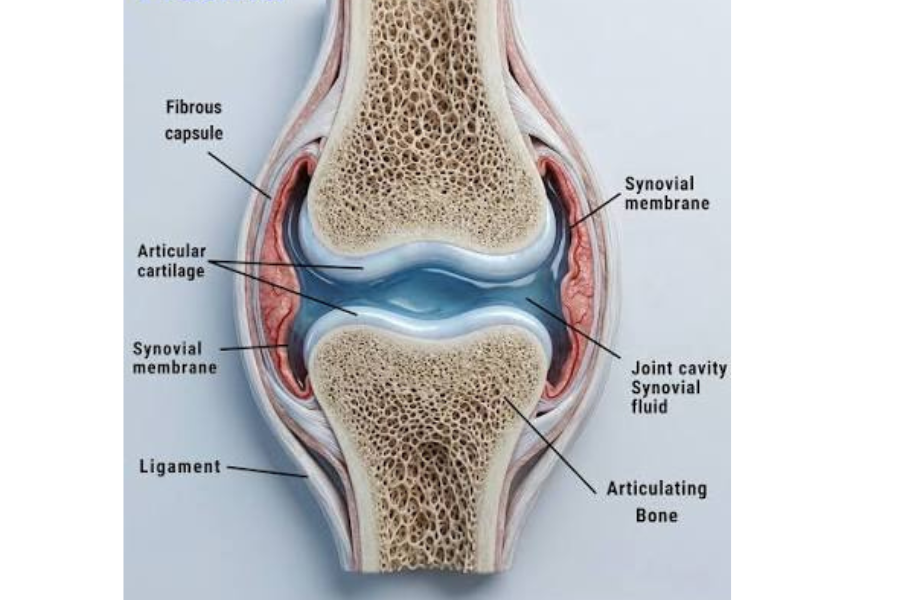
The first few steps are usually the hardest part. Knees resist bending, hips feel locked up, fingers need a minute before they cooperate. It usually improves once the body gets moving. A short walk or some stretching helps redistribute that fluid and gets things gliding again.
Synovial fluid is a thick, slippery liquid found in your joint cavities (such as knees, hips, and shoulders)
This kind of stiffness is common with age and doesn’t automatically mean arthritis. It’s often just the joints catching up on the lubrication they’ve been missing overnight. If it eases within a short time of getting up, that’s a good sign.
2. Low-grade inflammation lingers longer than it used to
Not all inflammation shows up as obvious swelling or sharp pain. Sometimes it settles in quietly, and after 40 the body seems to hold onto it longer than before. That alone can change how mornings feel.
Everyday activities, walking, gardening, climbing stairs, can leave behind small amounts of inflammation. The body keeps repairing tissue overnight, but that repair process slows down with age. By morning, whatever inflammation didn’t get cleared can leave joints stiff and slow to loosen.
Gentle movement tends to help here too. A short walk, some light stretching, or a warm shower gets circulation going and eases things along. If mornings feel like this on a regular basis, low-grade inflammation is often part of the reason.
3. Years of everyday movement start to catch up
Joints don’t get a day off. Every staircase, every grocery bag, every weekend project adds up somewhere. Most of the time the body absorbs it without complaint, but after 40 that accumulation starts to show.
The cartilage cushioning the ends of bones naturally thins with age. It still protects the joint, just not as effectively as before. As that layer wears down, joints tend to feel stiffer after long stretches of rest, especially first thing in the morning.
This isn’t necessarily arthritis either. It’s often just aging doing what aging does. Movement still helps, walking, stretching, regular exercise all support what cartilage remains. Sometimes the joints just need a few minutes to remember how they’re supposed to move.
4. Hormones quietly change how joints feel
Hormones do more than affect mood or metabolism.They also help protect the tissue that keeps joints moving comfortably. After 40, natural hormonal shifts start affecting cartilage, ligaments, and joint lubrication, usually so gradually that nobody notices until it adds up.
For women, declining estrogen around menopause can make joints feel stiffer and more sensitive, particularly in that first hour after waking. Men go through their own age-related hormonal shifts that affect muscle strength and joint support. As those protective hormones drop off, everyday movement can start to feel a little less comfortable.
Morning stiffness is often one of the earliest signs. Nothing has to be injured for the joints to need extra time to loosen up. The hormonal shift itself can’t be stopped, but staying active, keeping a healthy weight, and eating well all help offset it.
5. Muscles and tendons wake up slower
Joints never work alone. Muscles and tendons around them provide support, absorb impact, and help everything move smoothly. After 40, those tissues naturally lose some flexibility, especially after hours in the same sleeping position.
That’s a big part of why the first few steps each morning feel awkward. Tight muscles pull on the joints. Stiff tendons take longer to stretch out. Knees feel rigid, hips feel less flexible, even shoulders and ankles can need a few extra minutes.
Gentle activity usually fixes it. A short walk or some light range-of-motion work increases blood flow and loosens the surrounding tissue. Once the muscles and tendons loosen up, the joints tend to follow. Sometimes the stiffness isn’t coming from the joint at all. It’s coming from everything holding it together.
Conclusion
Morning stiffness after 40 can feel like an unavoidable part of getting older, but it’s usually the body asking for a bit more attention rather than warning of something serious. Overnight lubrication slows down, years of movement add up, inflammation lingers a little longer, hormones shift, and the muscles around the joints take their time waking up. Put together, that’s enough to make the first few steps of the day feel rougher than they should.
The reassuring part is that this kind of stiffness rarely points to a serious condition on its own. Regular movement, stretching, some strength training, a healthy weight, and an anti-inflammatory way of eating all help. If the stiffness sticks around, or comes with swelling or real pain, that’s worth bringing up with a doctor rather than waiting it out. Most of the time, the body isn’t slowing down so much as it’s just asking to be looked after a little more carefully than it used to need.