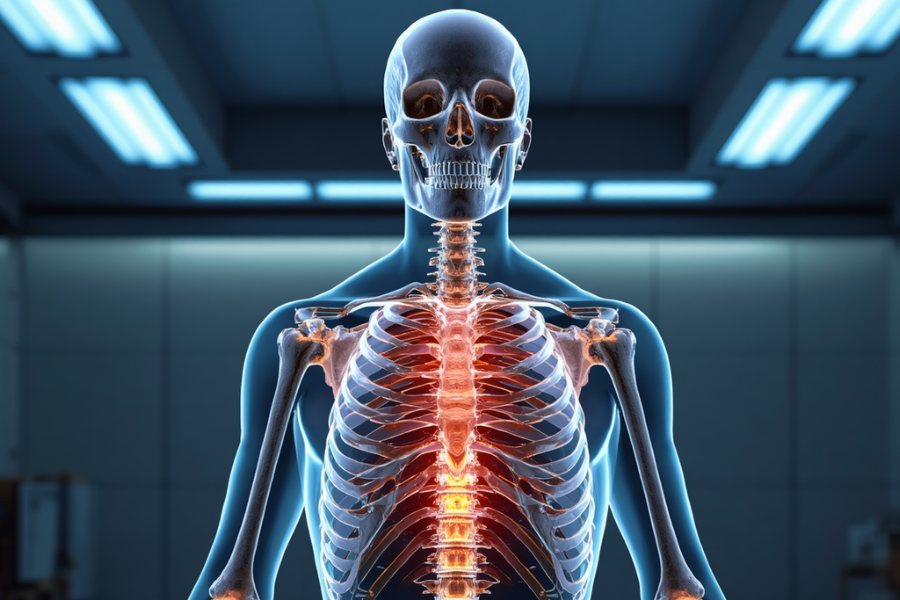
Bones look solid, but they’re living tissue that’s constantly rebuilding itself. Old bone breaks down, new bone forms, and that balance shifts with age, hormones, nutrition, activity, and certain health conditions.
Osteoporosis usually develops without any warning. Someone can feel completely healthy while their bones slowly thin out underneath them. Often the first real clue is a fracture from a fall that shouldn’t have caused serious damage at all.
Bone health carries a lot of outdated advice. That osteoporosis only hits older women. That exercise is risky for fragile bones. That calcium alone solves everything. None of that holds up against what’s actually known now.
Protecting bones takes more than one nutrient or habit. Strength training, weight-bearing movement, enough calcium and vitamin D, adequate protein, healthy lifestyle choices, and the right screening all play a part. Knowing what’s actually true makes it easier to act before bone loss turns into something serious.

Osteoporosis Myths
1.Osteoporosis Only Affects Older Women
Women do face higher risk, especially after menopause when falling estrogen speeds up bone loss. But men get osteoporosis too, and their fractures are just as serious.
Bone loss can start well before anyone thinks of themselves as old. Age, family history, low body weight, smoking, heavy drinking, inactivity, and certain medications all raise the risk. It usually shows no symptoms until a wrist, hip, or vertebra breaks from a fall that shouldn’t have caused real damage.
Bone health matters for everyone. Strength training, weight-bearing activity, enough calcium and vitamin D, quitting tobacco, and an honest conversation about personal risk protect the skeleton regardless of gender.
2.Dairy Alone Prevents Osteoporosis
Dairy helps, but it’s not the whole plan. Milk, yogurt, and cheese supply calcium, but bones need more than that to stay strong.

Vitamin D helps the body actually absorb calcium. Protein supplies the material for bone and muscle. Weight-bearing exercise gives bones the mechanical signal to stay dense, and magnesium and vitamin K round out the picture.
People who skip dairy for allergies, intolerance, or preference aren’t out of options. Fortified plant milks, leafy greens, calcium-set tofu, beans, nuts, and certain fish all contribute. A varied diet plus movement and proper vitamin D beats relying on one food group alone.
3.A Broken Bone Is Just Part of Getting Older
A fracture from a serious accident is one thing. A break from a minor fall or an ordinary twist is a different story entirely, and it can be a sign that bones are weaker than they should be.
These are called fragility fractures, breaks that happen from relatively minor force. They don’t automatically mean osteoporosis, but they shouldn’t be waved off as normal aging either.
After a fracture like this, a bone density evaluation is worth asking about. The earlier weak bone gets identified, the more can be done about it: strength training, adequate calcium and vitamin D, fall prevention, and treatment when needed. Repeated fractures aren’t something to just accept.
4.Once Bone Density Drops, It Can’t Improve
Bone is living tissue, constantly rebuilding itself through a process called remodeling, and that continues throughout adulthood. A drop in density isn’t the end of the story.
Certain treatments slow bone loss and, in some cases, actually increase density. Weight-bearing exercise and resistance training send the body a signal to keep bones stronger, while calcium, vitamin D, and protein support that process nutritionally.
The right plan depends on how much bone has been lost and someone’s fracture risk. Some people do fine with lifestyle changes alone, others need medication. Either way, bone loss deserves a doctor’s evaluation rather than being written off as permanent.
5.Exercise Is Dangerous for Weak Bones
Avoiding exercise after bone loss sounds cautious, but total inactivity actually weakens the body further. Bones respond to mechanical stress, and muscles get stronger through use, so the right kind of exercise supports both.
Walking, stair climbing, resistance bands, and supervised strength training work well for most adults. Stronger muscles also improve balance, which cuts down on the fall risk that matters most for people with weak bones.
The exercise still needs to fit the person. Someone with severe osteoporosis or previous fractures may need a physical therapist’s input, and certain high-impact or twisting movements might not be appropriate. But the answer is safe, guided movement, not sitting still.
6.Strong-Looking Bones Can’t Be Fragile
Bones can look completely fine on the outside while getting weaker underneath. Osteoporosis doesn’t change how someone looks, especially early on. A person can be active, fit, and normal-shaped while bone density quietly declines.
Bone strength depends on mineral density, structure, and tissue quality, none of which show up in a mirror. A slim person isn’t automatically higher risk, and a muscular person isn’t automatically protected.
Bone density testing reveals what appearance can’t. Depending on individual risk factors, that kind of screening is worth asking a doctor about rather than assuming healthy-looking means healthy bones.
7.Osteoporosis Always Causes Pain or Symptoms
Osteoporosis is often completely silent. Someone can lose significant bone density without feeling a thing, which is exactly why it often goes undetected until a fracture happens.
Back pain can follow a vertebral compression fracture, but osteoporosis itself doesn’t always hurt. A weakened vertebra can collapse during an ordinary movement, sometimes with only mild symptoms that go unnoticed for a while.
Feeling fine is not proof that bones are strong. Age, family history, menopause, certain medications, and low body weight all raise risk regardless of symptoms, and a bone density test can catch trouble before a fracture becomes the first real warning sign.
8.Calcium Supplements Beat Food Every Time
Supplements help when diet falls short, but more isn’t automatically better. For most people, food covers calcium needs while also delivering protein and other nutrients that pills don’t.
Milk, yogurt, cheese, fortified plant milk, calcium-set tofu, canned fish with bones, and leafy greens all add up. A varied diet makes hitting calcium targets easier than expected.
High-dose supplements taken without a real need can cause side effects and sometimes interact with medications, without adding extra bone protection. The smarter approach checks diet first and uses supplements only to fill a genuine gap.
9.Bone Loss Is Just Unavoidable With Age
Aging changes the skeleton, but major bone loss isn’t something to simply accept. Remodeling continues throughout life, and its pace is shaped by hormones, activity, nutrition, smoking, alcohol, and medications, all things that can be influenced.
Resistance and weight-bearing exercise keep sending bones the signal to stay dense, while calcium, vitamin D, and protein support the maintenance side. Risk still varies a lot person to person, shaped by menopause, family history, low body weight, and past fractures.
Getting older is inevitable. Severe bone loss isn’t just a number attached to age, and early attention can preserve strength and independence well into later life.
10.Bone Health Only Matters After Menopause
Menopause is a genuine turning point, but waiting until then to care about boneswastes years of opportunity. Bone strength builds throughout adulthood, shaped by nutrition, activity, hormones, and overall health long before menopause even starts.
Falling estrogen during the menopausal transition does speed up bone loss, which makes this period important, but the foundation gets laid decades earlier. Resistance exercise, enough calcium and vitamin D, adequate protein, and skipping smoking and heavy drinking all build that foundation.
Men aren’t exempt either. Age and certain conditions or medications can weaken bone in men too. Building protective habits now, not after a fracture, is what actually protects the skeleton long term.
Conclusion
Osteoporosis carries more myths than most conditions its size. Strong-looking bones can still be fragile, men get it too, and a fracture from a minor fall is never just aging. None of that means bone loss is unstoppable.
Calcium and vitamin D matter, but so do protein, resistance training, and the right screening at the right time. Building these habits now, rather than after the first fracture, is what actually protects mobility and independence for the years ahead.